
FinTech & Digital Economy
Build AI-powered investment platforms, blockchain banking, and the next wave of digital finance.
A Machine Learning Approach To Identify The Best Cryptocurrency For Investment
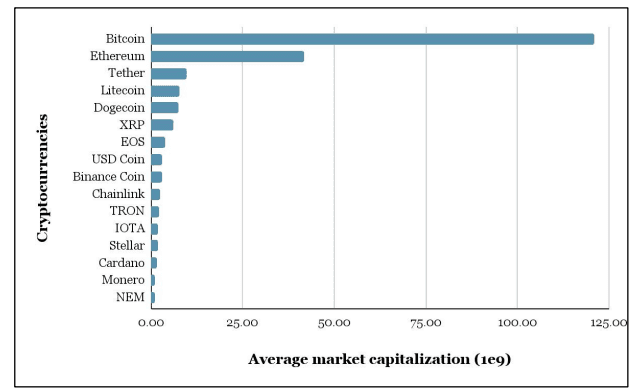
The abstract discusses the development of models to forecast cryptocurrency (CTC) prices and determine the most stable, high-return, and low-risk CTCs for investment purposes. Due to the lack of oversight and uncertainty surrounding cryptocurrencies, investors are often hesitant to invest in them. To address this, Artificial Neural Network (ANN) and Support Vector Machine (SVM) models are developed and trained using time-series data scraped from data.cryptocompare.com. The top five CTCs with the highest average market capitalization are considered for analysis. The ANN model achieved training and testing accuracies of 0.9876 and 0.9198, respectively, while the SVM model achieved 0.796 and 0.7981 for training and testing accuracies. Based on the data from August 1, 2022, the ANN and SVM models predicted Ethereum (ETH) and Dogecoin (DGC) as the best investment options for CTCs.
A Machine Learning Approach To Identify The Best Cryptocurrency For Investment
The abstract discusses the development of models to forecast cryptocurrency (CTC) prices and determine the most stable, high-return, and low-risk CTCs for investment purposes. Due to the lack of oversight and uncertainty surrounding cryptocurrencies, investors are often hesitant to invest in them. To address this, Artificial Neural Network (ANN) and Support Vector Machine (SVM) models are developed and trained using time-series data scraped from data.cryptocompare.com. The top five CTCs with the highest average market capitalization are considered for analysis. The ANN model achieved training and testing accuracies of 0.9876 and 0.9198, respectively, while the SVM model achieved 0.796 and 0.7981 for training and testing accuracies. Based on the data from August 1, 2022, the ANN and SVM models predicted Ethereum (ETH) and Dogecoin (DGC) as the best investment options for CTCs.
Statistical Scrutiny of the Prediction Capability of Different Time Series Machine Learning Models in Forecasting Bitcoin Prices
Cryptocurrencies (CTC) are decentralised digital currency. In the past decade, there has been a massive increase in its usage due to the advancement made in the field of blockchain. Bitcoin (BTC) is the first decentralised CTC which garnered a lot of attention from the media as well as the public due to its ability to sustain the momentum in the market. However, investing in BTC is not the first choice of the investor due to the market's erratic behaviour, price volatility and lack of a model that could be used to predict its price. For this purpose three machine learning (ML) models namely Long Short Term Memory (LSTM), Autoregressive Integrated Moving Average method (ARIMA) and Seasonal Autoregressive Integrated MovingAverage method (SARIMA) models have been employed which are statistically scrutinised on the basis of the performance metrics namely Root Mean Square Error (RMSE), Mean Absolute Percentage Error (MAPE) and coefficient of determination (R2 ).
Statistical Scrutiny of the Prediction Capability of Different Time Series Machine Learning Models in Forecasting Bitcoin Prices
Cryptocurrencies (CTC) are decentralised digital currency. In the past decade, there has been a massive increase in its usage due to the advancement made in the field of blockchain. Bitcoin (BTC) is the first decentralised CTC which garnered a lot of attention from the media as well as the public due to its ability to sustain the momentum in the market. However, investing in BTC is not the first choice of the investor due to the market's erratic behaviour, price volatility and lack of a model that could be used to predict its price. For this purpose three machine learning (ML) models namely Long Short Term Memory (LSTM), Autoregressive Integrated Moving Average method (ARIMA) and Seasonal Autoregressive Integrated MovingAverage method (SARIMA) models have been employed which are statistically scrutinised on the basis of the performance metrics namely Root Mean Square Error (RMSE), Mean Absolute Percentage Error (MAPE) and coefficient of determination (R2 ).
Development of a Robust Model to Predict the Sales of Tickets Employing Fuzzy IF- THEN Rules Based Algorithm
This study presents a robust model for predicting ticket sales of football matches based on game demand using a fuzzy IF-THEN rules-based algorithm. The proposed two-level simulation model first simulates the demand for a football match, and then simulates ticket sales by computing the Multi-Point Characteristics Index (MPCI) value. Factors influencing demand are categorized and expressed as linguistic terms, with uncertainties modeled using triangular fuzzy numbers (TFNs). The TFNs are converted to crisp values using the center of gravity method, and the properties and operations of TFNs are defined. The developed fuzzy IF-THEN rules-based algorithm, built on TFNs, provides an effective approach to forecasting ticket sales in the sports industry, considering the complex dynamics of game demand.
Development of a Robust Model to Predict the Sales of Tickets Employing Fuzzy IF- THEN Rules Based Algorithm
This study presents a robust model for predicting ticket sales of football matches based on game demand using a fuzzy IF-THEN rules-based algorithm. The proposed two-level simulation model first simulates the demand for a football match, and then simulates ticket sales by computing the Multi-Point Characteristics Index (MPCI) value. Factors influencing demand are categorized and expressed as linguistic terms, with uncertainties modeled using triangular fuzzy numbers (TFNs). The TFNs are converted to crisp values using the center of gravity method, and the properties and operations of TFNs are defined. The developed fuzzy IF-THEN rules-based algorithm, built on TFNs, provides an effective approach to forecasting ticket sales in the sports industry, considering the complex dynamics of game demand.

Application of Data Analysis and Soft Computation to Model the Need of Crop Insurance for the Indian Farmers
A very high level of uncertainty is associated with agriculture in the form of natural, social, and human-related actions. Farmers incur heavy losses whenever their farmlands are affected. Crop insurance is the answer to such losses that existed as an institutional response to nature-induced risk. Hence, there is a demand to model the need for crop insurance for Indian Farmers. The first part involves applying exploratory data analysis (EDA) to correlate the factors with the farmers' responses. A correlational analysis is also conducted to study the relationship between different factors. The second part involves the application of three machine learning (ML) algorithms, namely, Logistic Regression (LR), Random Forest (RF), and Gradient Boost classifier (GB) to meet the aims and objectives of the paper.
Application of Data Analysis and Soft Computation to Model the Need of Crop Insurance for the Indian Farmers
A very high level of uncertainty is associated with agriculture in the form of natural, social, and human-related actions. Farmers incur heavy losses whenever their farmlands are affected. Crop insurance is the answer to such losses that existed as an institutional response to nature-induced risk. Hence, there is a demand to model the need for crop insurance for Indian Farmers. The first part involves applying exploratory data analysis (EDA) to correlate the factors with the farmers' responses. A correlational analysis is also conducted to study the relationship between different factors. The second part involves the application of three machine learning (ML) algorithms, namely, Logistic Regression (LR), Random Forest (RF), and Gradient Boost classifier (GB) to meet the aims and objectives of the paper.
The Future of Travel: Assessing the Transformative Effects of Metaverse Travel on Tourism Industry
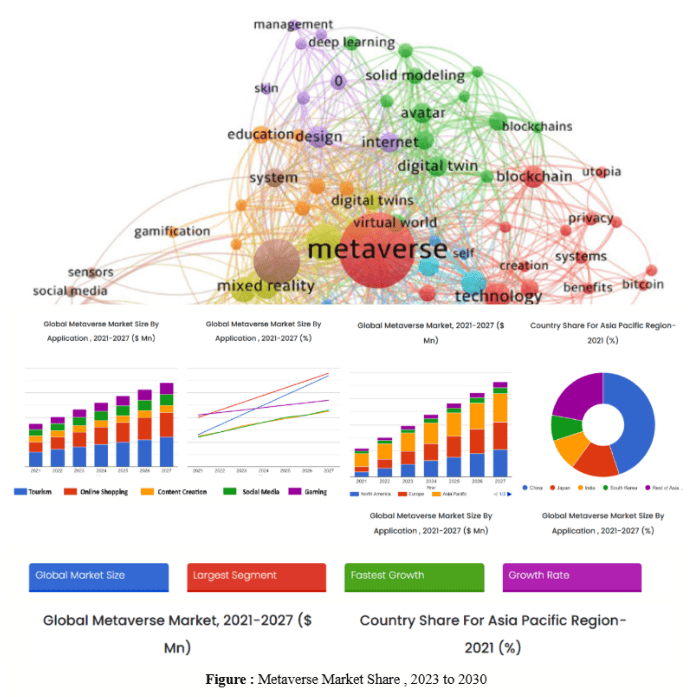
The main objective of this financial analysis project is to evaluate how virtual metaverse adoption could impact different aspects of the tourism industry. It aims to study areas such as revenue generation, employment opportunities, investment patterns, and overall economic growth within the tourism sector. To achieve this, the study will employ a rigorous research methodology that encompasses data collection from various sources, thorough data analysis, and financial modelling techniques. The analysis will involve studying real-world data from existing virtual metaverse platforms, tourism industry reports, and economic indicators to project potential outcomes. This project investigates the financial ramifications of incorporating virtual metaverse technologies into the tourism industry.
The Future of Travel: Assessing the Transformative Effects of Metaverse Travel on Tourism Industry
The main objective of this financial analysis project is to evaluate how virtual metaverse adoption could impact different aspects of the tourism industry. It aims to study areas such as revenue generation, employment opportunities, investment patterns, and overall economic growth within the tourism sector. To achieve this, the study will employ a rigorous research methodology that encompasses data collection from various sources, thorough data analysis, and financial modelling techniques. The analysis will involve studying real-world data from existing virtual metaverse platforms, tourism industry reports, and economic indicators to project potential outcomes. This project investigates the financial ramifications of incorporating virtual metaverse technologies into the tourism industry.

Computational Analysis of Awareness, Usage, and Effectiveness of MOOCS With Special Focus on Acceptance of Design Courses
The internet has revolutionized education, enabling the rise of Massive Open Online Courses (MOOCs) that provide widespread access to diverse academic content. Platforms like Udemy, Coursera, and EdX offer free and paid online courses, empowering learners with self-paced, flexible, and dynamic educational opportunities. These certifications can significantly boost careers by facilitating easier access to information, tailored learning experiences, and enhanced convenience. As the popularity of MOOCs continues to grow, a robust recommendation system is crucial to help learners navigate the wealth of educational resources available.
Computational Analysis of Awareness, Usage, and Effectiveness of MOOCS With Special Focus on Acceptance of Design Courses
The internet has revolutionized education, enabling the rise of Massive Open Online Courses (MOOCs) that provide widespread access to diverse academic content. Platforms like Udemy, Coursera, and EdX offer free and paid online courses, empowering learners with self-paced, flexible, and dynamic educational opportunities. These certifications can significantly boost careers by facilitating easier access to information, tailored learning experiences, and enhanced convenience. As the popularity of MOOCs continues to grow, a robust recommendation system is crucial to help learners navigate the wealth of educational resources available.

Smart Load Carriers Through IoT Integration: Revolutionizing Aid for the Downtrodden
Load carriers, often underappreciated in logistics, playa crucial role in efficient goods transportation. This project, “Smart Load Carrier,” revolutionizes load transportation by addressing health issues associated with manual handling. Combining a metal base, image processing, and an L298 motor driver, this autonomous carrier navigates efficiently, following human operators and detecting QR codes. Its impact extends to health, economics, and productivity by significantly reducing physical strain, minimizing accidents, and enhancing operational efficiency. The ongoing enhancements focus on increased load capacity and advanced autonomy, positioning the Smart Load Carrier as a transformative solution for diverse load transportation needs. This proposal introduces the implementation of the Smart Load Carrier, a groundbreaking solution aimed at simplifying the handling and transportation of heavy loads. By integrating computer vision and electronics, this project seeks to enhance the overall efficiency of load transportation.
Smart Load Carriers Through IoT Integration: Revolutionizing Aid for the Downtrodden
Load carriers, often underappreciated in logistics, playa crucial role in efficient goods transportation. This project, “Smart Load Carrier,” revolutionizes load transportation by addressing health issues associated with manual handling. Combining a metal base, image processing, and an L298 motor driver, this autonomous carrier navigates efficiently, following human operators and detecting QR codes. Its impact extends to health, economics, and productivity by significantly reducing physical strain, minimizing accidents, and enhancing operational efficiency. The ongoing enhancements focus on increased load capacity and advanced autonomy, positioning the Smart Load Carrier as a transformative solution for diverse load transportation needs. This proposal introduces the implementation of the Smart Load Carrier, a groundbreaking solution aimed at simplifying the handling and transportation of heavy loads. By integrating computer vision and electronics, this project seeks to enhance the overall efficiency of load transportation.

An Integrated Approach to Select the Dream Team for a Cricket Match
This paper proposes an integrated approach for selecting the best fantasy cricket team based on player performance. The approach combines the cross-entropy method, weighted sum method (WSM), and goal programming problem (GPP). It extracts player performance data through web scraping and computes points using cross-entropy and WSM, giving higher weightage to recent games. The GPP part selects players by using binary decision variables, where 1 indicates a player's inclusion in the team. The proposed algorithm dynamically adjusts factor weights based on recent performance. The approach is applied to select the dream team for an India-New Zealand cricket match, demonstrating its practicality.
An Integrated Approach to Select the Dream Team for a Cricket Match
This paper proposes an integrated approach for selecting the best fantasy cricket team based on player performance. The approach combines the cross-entropy method, weighted sum method (WSM), and goal programming problem (GPP). It extracts player performance data through web scraping and computes points using cross-entropy and WSM, giving higher weightage to recent games. The GPP part selects players by using binary decision variables, where 1 indicates a player's inclusion in the team. The proposed algorithm dynamically adjusts factor weights based on recent performance. The approach is applied to select the dream team for an India-New Zealand cricket match, demonstrating its practicality.

Examination of NPK Values and Their Effects on Soil
Soil health and soil quality are defined as the ability of the soil to perform as an essential living system under the restrictions of land use. This activity maintains the biological productivity of the soil, which benefits both the environment and human health. Soil quality is linked to soil function, whereas soil health portrays the soil as a finite, non-renewable, and dynamic living resource. The notion of soil health, which encompasses interactions between plant inputs and soil in creating a healthy environment, is discussed in this paper.
Examination of NPK Values and Their Effects on Soil
Soil health and soil quality are defined as the ability of the soil to perform as an essential living system under the restrictions of land use. This activity maintains the biological productivity of the soil, which benefits both the environment and human health. Soil quality is linked to soil function, whereas soil health portrays the soil as a finite, non-renewable, and dynamic living resource. The notion of soil health, which encompasses interactions between plant inputs and soil in creating a healthy environment, is discussed in this paper.
Find your nearest innovation lab
These awards reflect projects that pushed my boundaries, told deeper stories, and caught the attention of people who care about what visuals can say.
Find your nearest innovation lab
These awards reflect projects that pushed my boundaries, told deeper stories, and caught the attention of people who care about what visuals can say.