
Mathematics & Computing
Turn numbers into power, explore game theory, blockchain, and cryptography in action.
Mathematics & Computing
Turn numbers into power, explore game theory, blockchain, and cryptography in action.
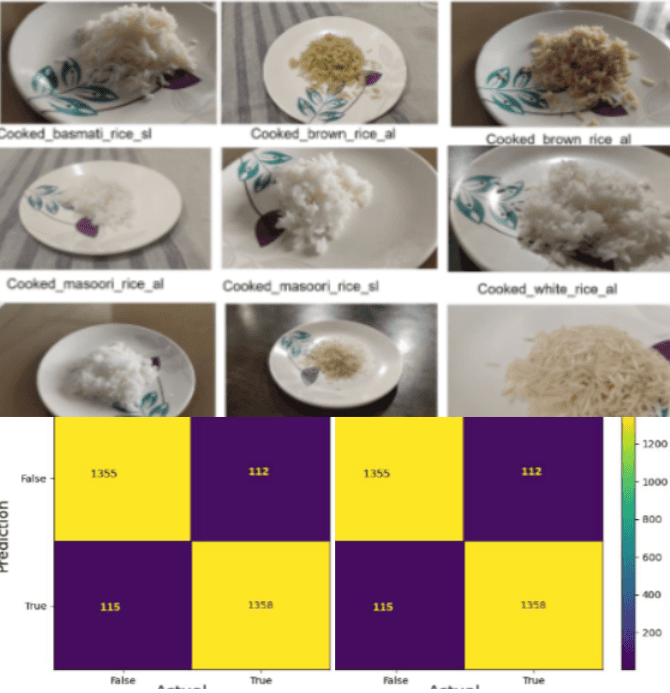
Automated Rice Analysis for Sugar Content and Dietary Recommendation
Accurate rice sugar content analysis and dietary advice are essential for establishing good eating practices and avoiding chronic illnesses. However, the traditional approaches for determining the sugar content of rice are time-consuming, labor-intensive, and subject to human error. We created an automated rice analysis system that uses machine learning algorithms to precisely assess the type of rice, detect the sugar content, and give individualized dietary advice to solve these issues. With a sensitivity value of 0.9, the system demonstrates excellent accuracy and dependability and can properly detect rice samples with high sugar content. The system's accuracy is 0.95, which highlights its capacity to accurately categorize rice samples while taking both high and low sugar content into account. The trained machine learning model has a false negative rate of 0.041 which is extremely low, thus allowing the users to rely on the model's output to make informed dietary decisions.
Utilizing Digital & Physical Simulations to Investigate
Accurate rice sugar content analysis and dietary advice are essential for establishing good eating practices and avoiding chronic illnesses. However, the traditional approaches for determining the sugar content of rice are time-consuming, labor-intensive, and subject to human error. We created an automated rice analysis system that uses machine learning algorithms to precisely assess the type of rice, detect the sugar content, and give individualized dietary advice to solve these issues. With a sensitivity value of 0.9, the system demonstrates excellent accuracy and dependability and can properly detect rice samples with high sugar content. The system's accuracy is 0.95, which highlights its capacity to accurately categorize rice samples while taking both high and low sugar content into account. The trained machine learning model has a false negative rate of 0.041 which is extremely low, thus allowing the users to rely on the model's output to make informed dietary decisions.
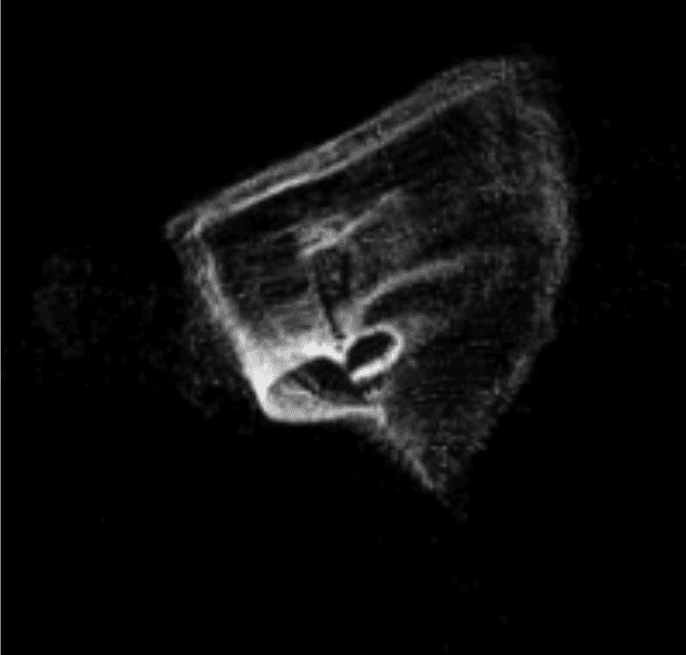
Bathymetric Scanner for Underwater Terrain Survey using Embedded System and TF Mini LiDAR Sensor
Marine Geology and OceanographyExisting methods for mapping deep-sea terrains are inefficient, expensive, and time-consuming. The current multi-beam echo-sounder technique requires a specialized submarine, making it risky and inaccessible. To address these issues, we have developed a remote LiDAR scanning device that can efficiently and cost-effectively map deep-sea environments. Our solution utilizes a 3D-printed, remotely controlled scanner to build detailed 3D models of seafloor terrains. This innovative approach revolutionizes the field of deep-sea mapping, enabling enhanced understanding of the Earth's environment and improved disaster response capabilities.
Bathymetric Scanner for Underwater Terrain Survey using Embedded System and TF Mini LiDAR Sensor
Marine Geology and OceanographyExisting methods for mapping deep-sea terrains are inefficient, expensive, and time-consuming. The current multi-beam echo-sounder technique requires a specialized submarine, making it risky and inaccessible. To address these issues, we have developed a remote LiDAR scanning device that can efficiently and cost-effectively map deep-sea environments. Our solution utilizes a 3D-printed, remotely controlled scanner to build detailed 3D models of seafloor terrains. This innovative approach revolutionizes the field of deep-sea mapping, enabling enhanced understanding of the Earth's environment and improved disaster response capabilities.
Bathymetric Scanner for Underwater Terrain Survey using Embedded System and TF Mini LiDAR Sensor
The research presented here looks into the vibration properties of 3D-printed airless tires, which have the potential to revolutionize tire design and transportation efficiency. Through extensive experimentation and vibration research, three distinct tire constructions were investigated. Because of its good damping and deformation qualities, thermoplastic polyurethane (TPU) was chosen as the 3D printing material. The experimental arrangement was designed to simulate real-world road conditions, and an MPU6050 sensor captured tire vibrations in three axes. The vibrational properties of the tire structures were revealed using Fast Fourier Transform (FFT) analysis, allowing for a comparative assessment of their stability. Structure 1 was found to be the most vibration-stable, followed by Structures 3 and 2.
Computational Analysis of Awareness, Usage, and Effectiveness of MOOCS With Special Focus on Acceptance of Design Courses
The internet has revolutionized education, enabling the rise of Massive Open Online Courses (MOOCs) that provide widespread access to diverse academic content. Platforms like Udemy, Coursera, and EdX offer free and paid online courses, empowering learners with self-paced, flexible, and dynamic educational opportunities. These certifications can significantly boost careers by facilitating easier access to information, tailored learning experiences, and enhanced convenience. As the popularity of MOOCs continues to grow, a robust recommendation system is crucial to help learners navigate the wealth of educational resources available.
Computational Analysis of Awareness, Usage, and Effectiveness of MOOCS With Special Focus on Acceptance of Design Courses
The internet has revolutionized education, enabling the rise of Massive Open Online Courses (MOOCs) that provide widespread access to diverse academic content. Platforms like Udemy, Coursera, and EdX offer free and paid online courses, empowering learners with self-paced, flexible, and dynamic educational opportunities. These certifications can significantly boost careers by facilitating easier access to information, tailored learning experiences, and enhanced convenience. As the popularity of MOOCs continues to grow, a robust recommendation system is crucial to help learners navigate the wealth of educational resources available.
Comparative Analysis of Traffic Classification Algorithms in Deep Learning
Aging roads and poor road-maintenance systems resulted many potholes, whose numbers increase over time. Potholes jeopardize road safety and transportation efficiency. Moreover, they are often a contributing factor to car accidents. To address the problems associated with potholes, the locations and size of potholes must be determined quickly to find the location a data base as to be developed, which requires a specific pothole-detection system that can collect pothole information at low cost and over a wide area. However, pothole repair has long relied on manual detection efforts causing loss of time and money to government. Thus, in this paper, we introduced a pothole-detection system using a commercial “Road sepoy”. The proposed system detects potholes using vision-based tracking system and MATLAB algorithm specifically designed to work with road sepoy camera giving us accurately in real-time environment. Geo-mapping the pothole in google maps helps the exact location.
Comparative Analysis of Traffic Classification Algorithms in Deep Learning
Aging roads and poor road-maintenance systems resulted many potholes, whose numbers increase over time. Potholes jeopardize road safety and transportation efficiency. Moreover, they are often a contributing factor to car accidents. To address the problems associated with potholes, the locations and size of potholes must be determined quickly to find the location a data base as to be developed, which requires a specific pothole-detection system that can collect pothole information at low cost and over a wide area. However, pothole repair has long relied on manual detection efforts causing loss of time and money to government. Thus, in this paper, we introduced a pothole-detection system using a commercial “Road sepoy”. The proposed system detects potholes using vision-based tracking system and MATLAB algorithm specifically designed to work with road sepoy camera giving us accurately in real-time environment. Geo-mapping the pothole in google maps helps the exact location.
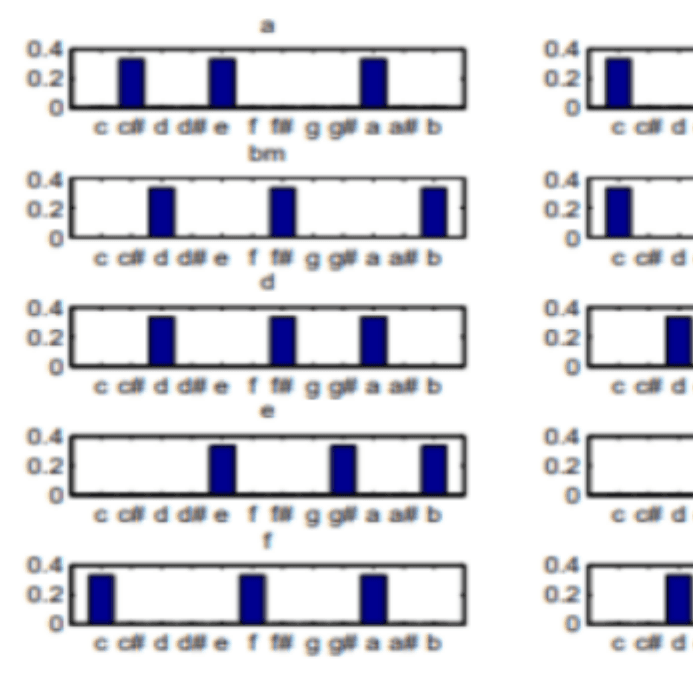
Autonomous Assistance in Guitar Tutoring for Uninterrupted Self Learning and Practice
Guitar Tutor is a software that guides users in playing the right guitar notes by comparing the real tune with the notes played and pointing out differences. It uses a database of chords created from audio files in WAV format. The software employs a Feed Forward Neural Network model to extract and classify notes from the audio input. It detects audio events, filters noise, and analyzes specific frequency patterns to predict the note played, comparing it with the base dataset with an accuracy of 85%.
Autonomous Assistance in Guitar Tutoring for Uninterrupted Self Learning and Practice
Guitar Tutor is a software that guides users in playing the right guitar notes by comparing the real tune with the notes played and pointing out differences. It uses a database of chords created from audio files in WAV format. The software employs a Feed Forward Neural Network model to extract and classify notes from the audio input. It detects audio events, filters noise, and analyzes specific frequency patterns to predict the note played, comparing it with the base dataset with an accuracy of 85%.
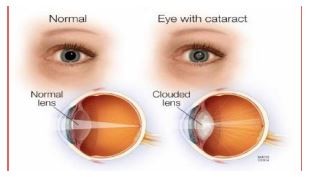
An Autonomous way to detect and quantify Cataracts using Computer Vision
The project focuses on detecting cataracts using Python, aiming to address limitations in current detection methods. Cataracts, a leading cause of blindness in older individuals, pose challenges for diagnosis, especially in rural areas with limited access to ophthalmologists. To overcome these challenges, we developed a program using Python libraries such as OpenCV, NumPy, and FPDF. This program analyzes patient information and eye images to generate a PDF report indicating the presence and severity of cataracts. By creating color masks and incorporating range checks, our program accurately detects cataracts and provides essential information for quantifying the severity of the condition. This solution facilitates early detection and intervention by providing doctors with comprehensive reports for efficient diagnosis.
An Autonomous way to detect and quantify Cataracts using Computer Vision
The project focuses on detecting cataracts using Python, aiming to address limitations in current detection methods. Cataracts, a leading cause of blindness in older individuals, pose challenges for diagnosis, especially in rural areas with limited access to ophthalmologists. To overcome these challenges, we developed a program using Python libraries such as OpenCV, NumPy, and FPDF. This program analyzes patient information and eye images to generate a PDF report indicating the presence and severity of cataracts. By creating color masks and incorporating range checks, our program accurately detects cataracts and provides essential information for quantifying the severity of the condition. This solution facilitates early detection and intervention by providing doctors with comprehensive reports for efficient diagnosis.

Application of Data Analysis and Soft Computation to Model the Need of Crop Insurance for the Indian Farmers
A very high level of uncertainty is associated with agriculture in the form of natural, social, and human-related actions. Farmers incur heavy losses whenever their farmlands are affected. Crop insurance is the answer to such losses that existed as an institutional response to nature-induced risk. Hence, there is a demand to model the need for crop insurance for Indian Farmers. The first part involves applying exploratory data analysis (EDA) to correlate the factors with the farmers' responses. A correlational analysis is also conducted to study the relationship between different factors. The second part involves the application of three machine learning (ML) algorithms, namely, Logistic Regression (LR), Random Forest (RF), and Gradient Boost classifier (GB) to meet the aims and objectives of the paper.
Application of Data Analysis and Soft Computation to Model the Need of Crop Insurance for the Indian Farmers
A very high level of uncertainty is associated with agriculture in the form of natural, social, and human-related actions. Farmers incur heavy losses whenever their farmlands are affected. Crop insurance is the answer to such losses that existed as an institutional response to nature-induced risk. Hence, there is a demand to model the need for crop insurance for Indian Farmers. The first part involves applying exploratory data analysis (EDA) to correlate the factors with the farmers' responses. A correlational analysis is also conducted to study the relationship between different factors. The second part involves the application of three machine learning (ML) algorithms, namely, Logistic Regression (LR), Random Forest (RF), and Gradient Boost classifier (GB) to meet the aims and objectives of the paper.
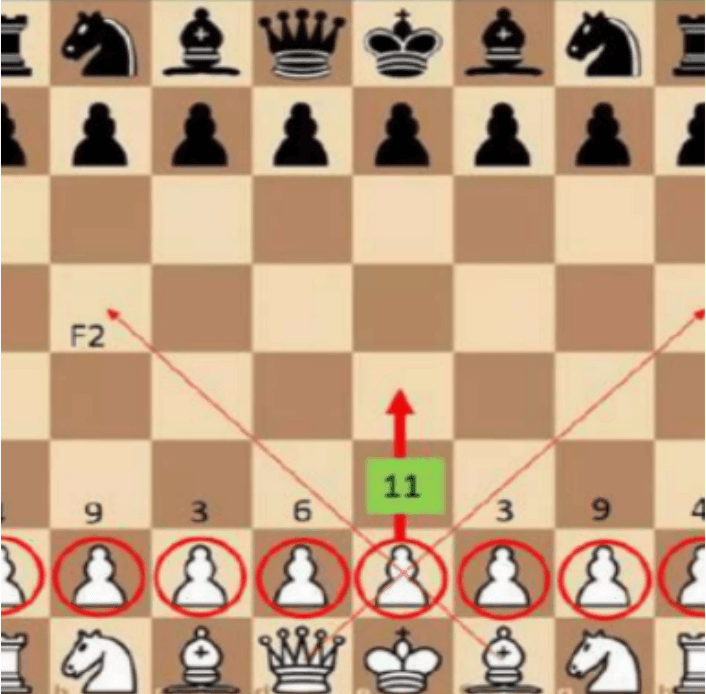
Novel Approach towards Creating Neural Model to Understand 6 Types of Chess Pieces for Planning and Validation of Future Moves
We employed Convolutional Neural Networks (CNNs) for move prediction and validation in chess, utilizing two modules. The first module, the Move Generation Model, employs a CNN to select the optimal chess piece for a smart move. The second module, the Move Validator Model, utilizes another CNN to evaluate all potential moves and select the best one. Our method improves upon traditional chess move logic by employing CNNs trained on a dataset of 20,000 games, totaling 250,000 possible moves, played by players with an ELO rating higher than 2000. The Move Generator Model is trained on all moves, while the Move Validator Model focuses on moves made by individual pieces.
Novel Approach towards Creating Neural Model to Understand 6 Types of Chess Pieces for Planning and Validation of Future Moves
We employed Convolutional Neural Networks (CNNs) for move prediction and validation in chess, utilizing two modules. The first module, the Move Generation Model, employs a CNN to select the optimal chess piece for a smart move. The second module, the Move Validator Model, utilizes another CNN to evaluate all potential moves and select the best one. Our method improves upon traditional chess move logic by employing CNNs trained on a dataset of 20,000 games, totaling 250,000 possible moves, played by players with an ELO rating higher than 2000. The Move Generator Model is trained on all moves, while the Move Validator Model focuses on moves made by individual pieces.
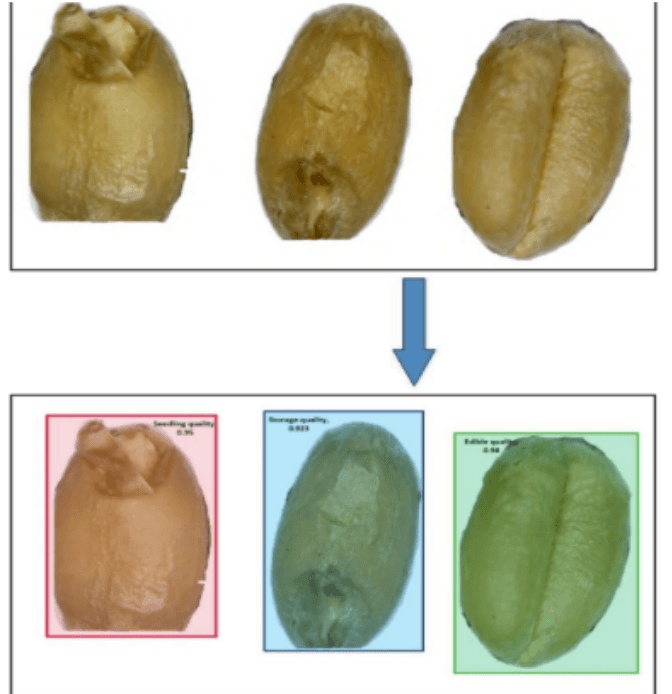
Assessment of Quality of The Wheat Grain Using Image Processing and Mask R-CNN
The study develops a Mask Regional Convolutional Neural Network (Mask RCNN) model to classify the quality of wheat grains into four categories: storage quality, edible, seeding quality, or rotten. The model is trained on 122 images created from 2,000 grains, using image processing to extract grain texture. The wheat grains are annotated with VGG Image Annotator, and the JSON files are used for training and testing the Mask RCNN model. The trained model achieves low training and validation losses and demonstrates high accuracy in classifying the grain quality when tested on a new image with all four classes.
Assessment of Quality of The Wheat Grain Using Image Processing and Mask R-CNN
The study develops a Mask Regional Convolutional Neural Network (Mask RCNN) model to classify the quality of wheat grains into four categories: storage quality, edible, seeding quality, or rotten. The model is trained on 122 images created from 2,000 grains, using image processing to extract grain texture. The wheat grains are annotated with VGG Image Annotator, and the JSON files are used for training and testing the Mask RCNN model. The trained model achieves low training and validation losses and demonstrates high accuracy in classifying the grain quality when tested on a new image with all four classes.
A Machine Learning Approach To Identify The Best Cryptocurrency For Investment
The abstract discusses the development of models to forecast cryptocurrency (CTC) prices and determine the most stable, high-return, and low-risk CTCs for investment purposes. Due to the lack of oversight and uncertainty surrounding cryptocurrencies, investors are often hesitant to invest in them. To address this, Artificial Neural Network (ANN) and Support Vector Machine (SVM) models are developed and trained using time-series data scraped from data.cryptocompare.com. The top five CTCs with the highest average market capitalization are considered for analysis. The ANN model achieved training and testing accuracies of 0.9876 and 0.9198, respectively, while the SVM model achieved 0.796 and 0.7981 for training and testing accuracies. Based on the data from August 1, 2022, the ANN and SVM models predicted Ethereum (ETH) and Dogecoin (DGC) as the best investment options for CTCs.
A Machine Learning Approach To Identify The Best Cryptocurrency For Investment
The abstract discusses the development of models to forecast cryptocurrency (CTC) prices and determine the most stable, high-return, and low-risk CTCs for investment purposes. Due to the lack of oversight and uncertainty surrounding cryptocurrencies, investors are often hesitant to invest in them. To address this, Artificial Neural Network (ANN) and Support Vector Machine (SVM) models are developed and trained using time-series data scraped from data.cryptocompare.com. The top five CTCs with the highest average market capitalization are considered for analysis. The ANN model achieved training and testing accuracies of 0.9876 and 0.9198, respectively, while the SVM model achieved 0.796 and 0.7981 for training and testing accuracies. Based on the data from August 1, 2022, the ANN and SVM models predicted Ethereum (ETH) and Dogecoin (DGC) as the best investment options for CTCs.
Machine Learning for Fault Detection in DC Motors and the Role of Mounting Configurations
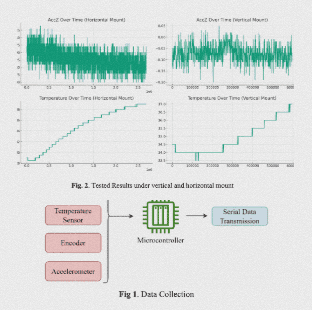
Unexpected motor failures can disrupt industrial processes, affecting efficiency, safety, and profitability. This study introduces an AI-based approach for industrial DC motor monitoring to address these issues. This tool accurately detects and predicts motor malfunctions using the k-Nearest Neighbours (k-NN) machine learning model using sensor data analysis, enabling proactive maintenance. This system streamlines industrial operations by reducing downtime, repair costs, and safety. We tested this algorithm under vertical and horizontal mounting conditions for performance analysis. In fully loaded conditions, horizontal mounting outperformed vertical mounting. The k-NN model detected and predicted motor faults with 95.22% accuracy on the test set. Our AI-enabled tool can improve industrial efficiency and safety, according to this study.
Machine Learning for Fault Detection in DC Motors and the Role of Mounting Configurations
Unexpected motor failures can disrupt industrial processes, affecting efficiency, safety, and profitability. This study introduces an AI-based approach for industrial DC motor monitoring to address these issues. This tool accurately detects and predicts motor malfunctions using the k-Nearest Neighbours (k-NN) machine learning model using sensor data analysis, enabling proactive maintenance. This system streamlines industrial operations by reducing downtime, repair costs, and safety. We tested this algorithm under vertical and horizontal mounting conditions for performance analysis. In fully loaded conditions, horizontal mounting outperformed vertical mounting. The k-NN model detected and predicted motor faults with 95.22% accuracy on the test set. Our AI-enabled tool can improve industrial efficiency and safety, according to this study.
Development of a Robust Model to Predict the Sales of Tickets Employing Fuzzy IF- THEN Rules Based Algorithm
This study presents a robust model for predicting ticket sales of football matches based on game demand using a fuzzy IF-THEN rules-based algorithm. The proposed two-level simulation model first simulates the demand for a football match, and then simulates ticket sales by computing the Multi-Point Characteristics Index (MPCI) value. Factors influencing demand are categorized and expressed as linguistic terms, with uncertainties modeled using triangular fuzzy numbers (TFNs). The TFNs are converted to crisp values using the center of gravity method, and the properties and operations of TFNs are defined. The developed fuzzy IF-THEN rules-based algorithm, built on TFNs, provides an effective approach to forecasting ticket sales in the sports industry, considering the complex dynamics of game demand.
Development of a Robust Model to Predict the Sales of Tickets Employing Fuzzy IF- THEN Rules Based Algorithm
This study presents a robust model for predicting ticket sales of football matches based on game demand using a fuzzy IF-THEN rules-based algorithm. The proposed two-level simulation model first simulates the demand for a football match, and then simulates ticket sales by computing the Multi-Point Characteristics Index (MPCI) value. Factors influencing demand are categorized and expressed as linguistic terms, with uncertainties modeled using triangular fuzzy numbers (TFNs). The TFNs are converted to crisp values using the center of gravity method, and the properties and operations of TFNs are defined. The developed fuzzy IF-THEN rules-based algorithm, built on TFNs, provides an effective approach to forecasting ticket sales in the sports industry, considering the complex dynamics of game demand.
A Logical Agent Approach to Solving the Wumpus
World Problem: An Analysis of Game Trees
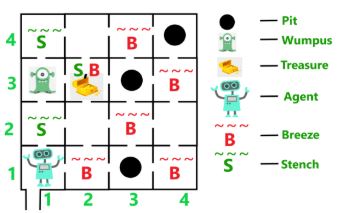
The Wumpus world problem is a classic AI challenge in which an Agent must navigate a maze like environment to find and retrieve gold while avoiding obstacles such as pits and a monster called the Wumpus. This project aims to implement a logical agent to solve the Wumpus World problem using a combination of first-order logic and the Minimax algorithm. The environment is represented as a set of logical propositions. The agent's knowledge base is expressed as a set of first-order logic rules describing the relationships between the propositions. The Minimax algorithm is used to generate a game tree and compute the minimax values of the nodes in the tree, allowing the agent to make informed decisions about which actions to take. The implementation demonstrates the versatility and expressiveness of logical agents for solving complex AI problems and highlights the potential benefits of using first- order logic in AI systems.
A Logical Agent Approach to Solving the Wumpus
World Problem: An Analysis of Game Trees
The Wumpus world problem is a classic AI challenge in which an Agent must navigate a maze like environment to find and retrieve gold while avoiding obstacles such as pits and a monster called the Wumpus. This project aims to implement a logical agent to solve the Wumpus World problem using a combination of first-order logic and the Minimax algorithm. The environment is represented as a set of logical propositions. The agent's knowledge base is expressed as a set of first-order logic rules describing the relationships between the propositions. The Minimax algorithm is used to generate a game tree and compute the minimax values of the nodes in the tree, allowing the agent to make informed decisions about which actions to take. The implementation demonstrates the versatility and expressiveness of logical agents for solving complex AI problems and highlights the potential benefits of using first- order logic in AI systems.
A Logical Agent Approach to Solving the Wumpus
World Problem: An Analysis of Game Trees
The research presented here looks into the vibration properties of 3D-printed airless tires, which have the potential to revolutionize tire design and transportation efficiency. Through extensive experimentation and vibration research, three distinct tire constructions were investigated. Because of its good damping and deformation qualities, thermoplastic polyurethane (TPU) was chosen as the 3D printing material. The experimental arrangement was designed to simulate real-world road conditions, and an MPU6050 sensor captured tire vibrations in three axes. The vibrational properties of the tire structures were revealed using Fast Fourier Transform (FFT) analysis, allowing for a comparative assessment of their stability. Structure 1 was found to be the most vibration-stable, followed by Structures 3 and 2.

An Integrated Approach to Select the
Dream Team for a Cricket Match
This paper proposes an integrated approach for selecting the best fantasy cricket team based on player performance. The approach combines the cross-entropy method, weighted sum method (WSM), and goal programming problem (GPP). It extracts player performance data through web scraping and computes points using cross-entropy and WSM, giving higher weightage to recent games. The GPP part selects players by using binary decision variables, where 1 indicates a player's inclusion in the team. The proposed algorithm dynamically adjusts factor weights based on recent performance. The approach is applied to select the dream team for an India-New Zealand cricket match, demonstrating its practicality.
An Integrated Approach to Select the
Dream Team for a Cricket Match
This paper proposes an integrated approach for selecting the best fantasy cricket team based on player performance. The approach combines the cross-entropy method, weighted sum method (WSM), and goal programming problem (GPP). It extracts player performance data through web scraping and computes points using cross-entropy and WSM, giving higher weightage to recent games. The GPP part selects players by using binary decision variables, where 1 indicates a player's inclusion in the team. The proposed algorithm dynamically adjusts factor weights based on recent performance. The approach is applied to select the dream team for an India-New Zealand cricket match, demonstrating its practicality.
Find your nearest innovation lab
These awards reflect projects that pushed my boundaries, told deeper stories, and caught the attention of people who care about what visuals can say.
Find your nearest innovation lab
These awards reflect projects that pushed my boundaries, told deeper stories, and caught the attention of people who care about what visuals can say.